
Scandlines and the ships on the route
Scandlines runs the Rostock-Gedser crossing with two hybrid ferries built specially for this route. Get to know the company, the ships M/S Berlin and M/S Copenhagen and what is on board.
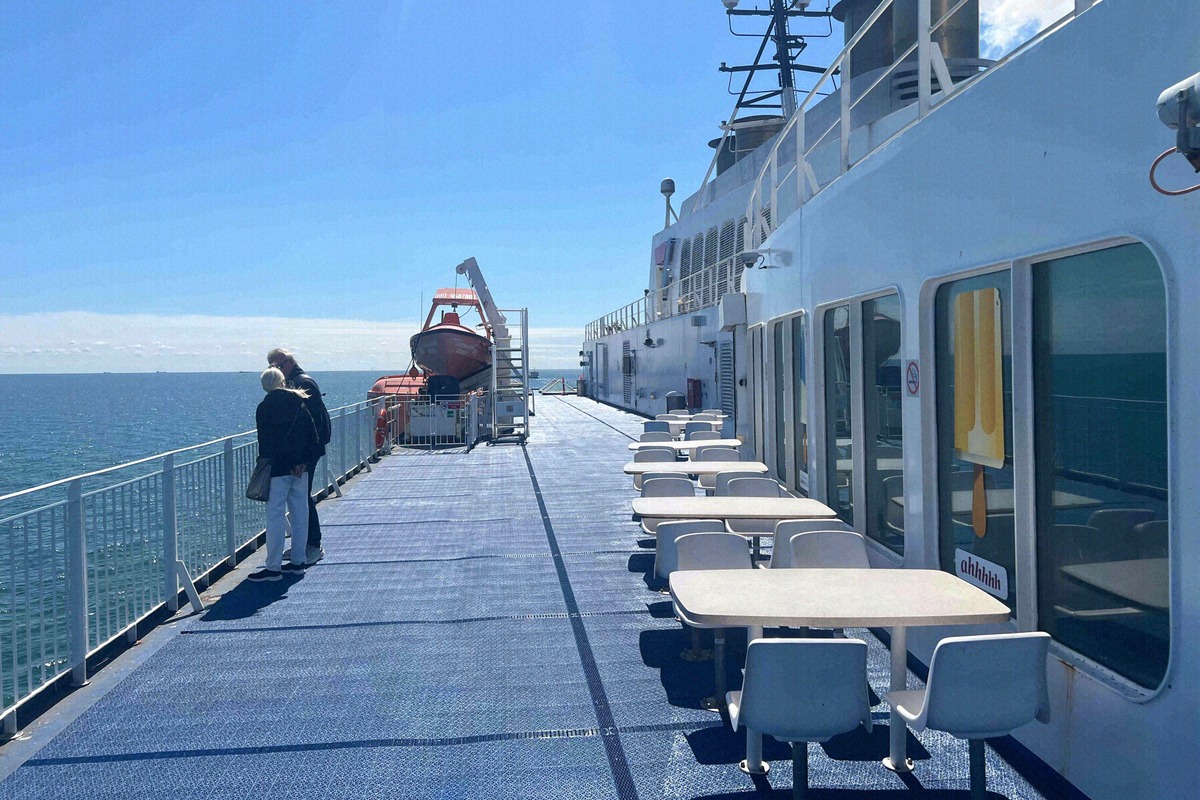
The company and its ships
Table of Contents
Scandlines operates the Rostock-Gedser route. The company runs two routes between Germany and Denmark, Rostock-Gedser across the Baltic and Puttgarden-Rødby across the Fehmarn Belt, and uses six hybrid ferries on them. It was formed in 1998 from the merger of Deutsche Fährgesellschaft Ostsee with the Danish DSB Rederi; it is based in Hamburg and owned by a consortium of three infrastructure funds: Igneo Infrastructure Partners, 3i Group and Federated Hermes.
For you as a traveller, that mainly means one thing: there is only one operator on this route. The question is never which ferry company, but which departure and which fare.
M/S Berlin and M/S Copenhagen
Both ships were built for exactly this crossing, are identical in design and have been in regular service since 2016. Their hull is designed for the shallow waters along the route, which saves extra fuel. They are registered in Rostock and in Gedser, one home port on each side.
| Specifications | M/S Berlin · M/S Copenhagen |
|---|---|
| In service since | 2016 |
| Length overall | 169.50 m |
| Beam overall | 25.40 m |
| Service speed | 21.0 knots |
| Passengers | max. 1,300 |
| Vehicle decks | Deck 3 and Deck 5, 800 lane metres each |
| Capacity per deck | 48 lorries or 230 cars |
| Clearance | 4.60 m (Deck 3), 4.20 m (Deck 5) |
| Rotor sail | 30 m tall, Copenhagen since 2020, Berlin since 2022 |
The build history explains why six years passed between keel laying and entry into service. The ships were ordered from the P+S shipyards in Stralsund in 2010. After their launch in 2012, Scandlines cancelled the contracts because of design flaws and excess weight, bought the hulls back from the insolvency estate in 2014 and had them completed at the Fayard shipyard in Munkebo, Denmark. Both entered service in 2016.
Hybrid propulsion and rotor sail
The two ferries run on diesel-electric power with battery support. Instead of running all generators at inefficient partial load, a few generators work close to their optimum, and the on-board energy storage evens out the peak loads. The battery pack on the two ships holds 1,500 kilowatt hours.
Then there is the most striking feature, which you can already see from the terminal: the white cylinder on the upper deck. The rotor sail from the Finnish manufacturer Norsepower is 30 metres tall and uses the Magnus effect: a cylinder rotating in the wind creates thrust at right angles to the wind direction. It suits this route particularly well, because Rostock-Gedser runs almost at right angles to the prevailing westerly and easterly winds. Scandlines puts the CO₂ saving at four per cent on average. Copenhagen got its rotor in 2020, Berlin in 2022.
On board
Two hours is long enough for a proper meal and short enough that nobody needs a cabin, and there are none on this route.
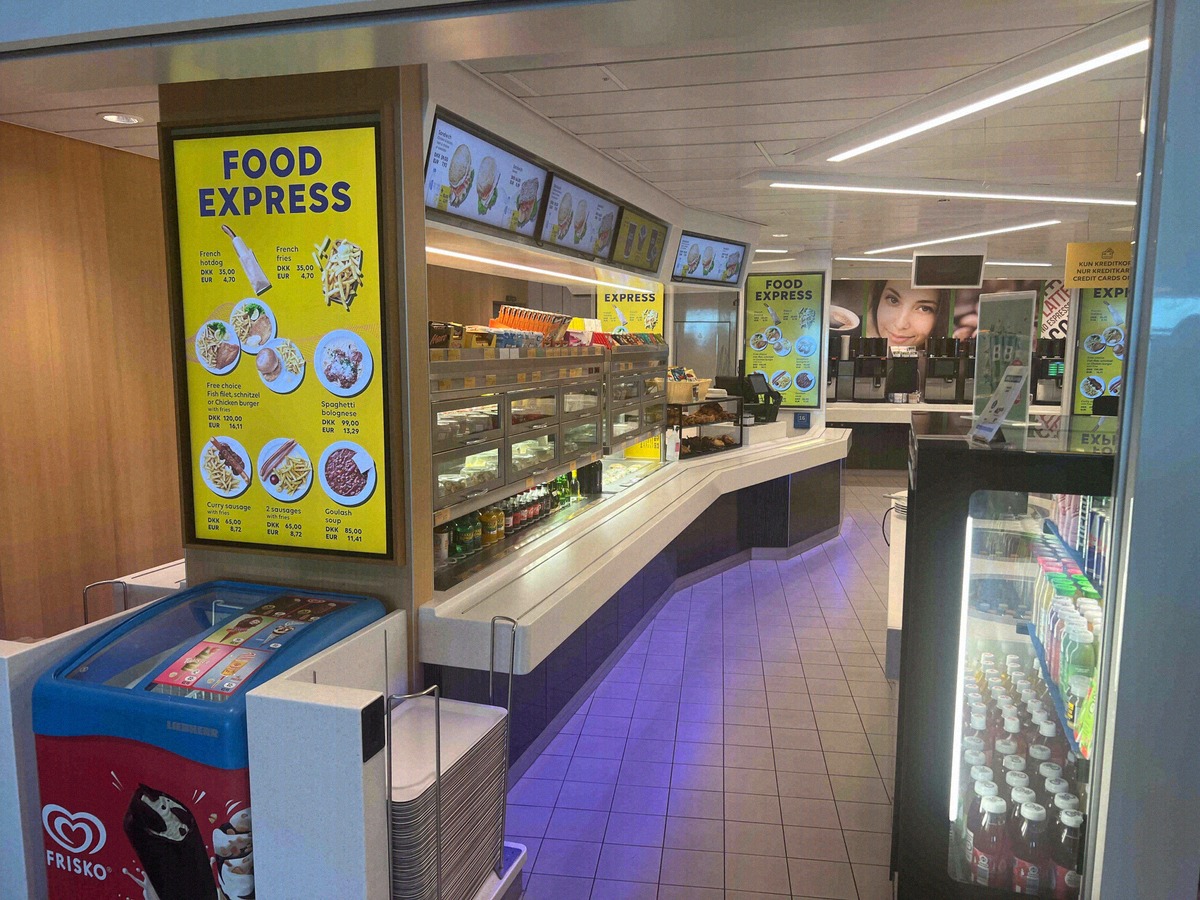
- Scandlines Kitchen Buffet: buffet for breakfast, lunch and dinner, open from 06:00 to 20:00.
- Scandlines Food Express: cafeteria with fish fillet, sandwiches, hot dogs and chips, around the clock.
- Scandlines Coffee: coffee, snacks and Starbucks products.
- Travel Shop: perfume, cosmetics, sweets and drinks, also open around the clock.
- Free Wi-Fi on all ships on the route and in the waiting areas at both ports.
There is a play area for children on the passenger deck. Dogs and cats are subject to their own rules; see the Travelling with Pets page. If you travel with a wheelchair or reduced mobility, state this when you book, use the staffed yellow lane and be at the port around 30 minutes before departure; parking spaces near the lift are limited.
Ports and who runs them
The port facilities in Gedser belong to the ferry company itself, while in Rostock it leases its space in the Überseehafen. In practice you will hardly notice, except that in Rostock one of the two BorderShops is right by the terminal. For how to get to the terminals, see the Rostock Port & Ferry Terminal and Gedser Port & Ferry Terminal pages; the check-in page covers the procedure at the desk.
For the crossing, the next departures and booking at a glance, see the Rostock-Gedser ferry page.
FAQ
Common questions about the company and the ships
Which ships sail on the Rostock-Gedser route? +
The two hybrid ferries M/S Berlin and M/S Copenhagen. They are sister ships that entered service in 2016 and sail only on this route. The timetable shows which ship operates your departure.
How tall can my motorhome be? +
Clearance is 4.60 metres on the lower vehicle deck and 4.20 metres on the upper one. Register oversized vehicles when you book; the check-in page explains how they are handled.
What is a rotor sail? +
A 30-metre-tall rotating cylinder on deck. When the wind hits the cylinder, it creates a force at right angles to the wind direction that helps drive the ship forward. Scandlines puts the CO₂ saving at four per cent on average.
Is there Wi-Fi on board? +
Yes, Wi-Fi is free on all ferries between Rostock and Gedser, as well as in the waiting areas at both ports. Select the "Scandlines" network and accept the terms in your browser.
Can I pay by card on board? +
The restaurants, café and Travel Shop are all cashless. As you are travelling between two currency areas, a card is the simplest option anyway.
How much does the crossing cost? +
That depends on your vehicle, the ticket type and when you book. All fares are on the Prices & Fares page.
Book your crossing with Scandlines
Reserve your ticket for the Rostock-Gedser ferry crossing now.