From Rostock to Copenhagen by ferry
There is no direct ferry from Rostock to Copenhagen. The journey has two legs: the crossing to Gedser and the onward journey through Denmark. Together that takes around four hours.
The journey from Rostock via Gedser to Copenhagen
Table of Contents
Copenhagen is around 150 kilometres by road from the ferry port of Gedser. So getting there from Rostock is not a single ferry trip but a journey in stages: two hours across the Baltic, then across Falster and Zealand into the Danish capital. It is the shortest way from Mecklenburg-Vorpommern to Copenhagen, and the only one where you get a break along the way without having to stop.
| Leg | Route | Duration |
|---|---|---|
| Ferry | Rostock Überseehafen to Gedser, 52 km at sea | approx. 2 hrs |
| Road | Gedser to Copenhagen via the E55 | approx. 2 hrs |
| Train/bus | Gedser via Nykøbing Falster to Copenhagen | approx. 2.5 hrs |
Add check-in and disembarking, and a good five hours door to door is a realistic estimate.
How the journey works
At Rostock's Überseehafen you join the check-in lanes, the Rostock-Gedser ferry sails, and two hours later you roll off the ramp in Gedser. The terminal exit leads straight onto Gedser Landevej, which continues north as the E55. The route is signposted all the way, so from the ship to Copenhagen you essentially follow one road.
The terminal procedure is covered on the check-in and Rostock Port & Ferry Terminal pages, and the Danish side on Gedser Port & Ferry Terminal.
To Copenhagen by car
From Gedser you follow the E55 across Falster, cross the Farø bridges to Zealand and stay on it into southern Copenhagen. That is about two hours of driving, not counting roadworks or rush-hour traffic. You will find plenty of both around Copenhagen, so allow extra time if you have an appointment.
Once you are in the centre, a car soon becomes more hindrance than help: Copenhagen strictly regulates parking in the inner city, and many destinations lie in zones where parking is expensive. If you are only staying for the day, it makes sense to leave the car at a park-and-ride site on the edge of the city and take the metro in.
To Copenhagen without a car
As a foot passenger you check in at the passenger terminal, in Rostock around 30 minutes before departure, because a shuttle bus takes you to the ship. From Gedser, Movia bus 740 takes you to Nykøbing Falster, where you change to the train to Copenhagen. Together that is about two and a half hours from the ferry port.
Two things are different from travelling by car: the bus runs less often in the evening and at weekends, and a missed connection can quickly cost you an hour. So check the connection for your actual travel day rather than assuming a regular service. You can take a bicycle for a small surcharge; Copenhagen is the city where that is most worthwhile.
Choosing the right departure
The route is served throughout the day, several times in each direction. Which departure suits you depends less on the timetable than on your plans:
- Early start: the first departure is essential for a day trip worthy of the name.
- Midday: the most relaxed option if you are staying overnight in Copenhagen.
- Evening: a good choice if you just want to get there and your hotel is already booked.
The exact times for your travel day are in the timetable, as they change with the season.
What the journey costs
The price is made up of several items, and only the first is a ferry fare:
- Ferry ticket: depends on vehicle type and ticket type. All fares are on the Prices & Fares page.
- Fuel: around 150 kilometres each way from Gedser.
- Parking in Copenhagen: the item most people underestimate.
- Toll: only if you continue to Sweden across the Øresund Bridge.
Without a car, the last three items are replaced by bus and train tickets in Denmark.
Is Copenhagen worth it as a day trip?
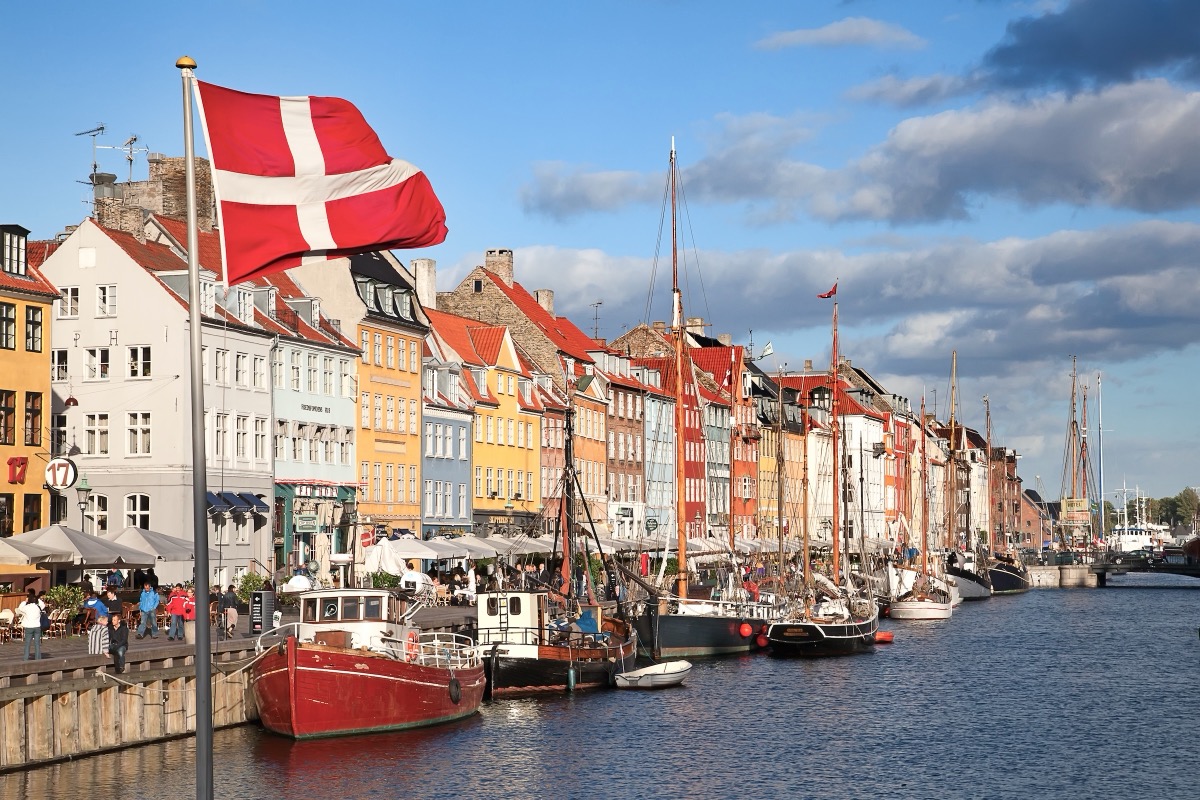
Do the maths: four hours at sea there and back, four hours on the road, plus check-in and waiting time. By car and on the first departure, you are left with four to five hours in the city: enough for Nyhavn, a walk through the centre and a meal, but too little for serious museum visits.
Without a car, the day becomes a race against the clock. The more realistic alternative is to spend your day in Gedser and on Falster: the port lies at Denmark's southern tip, the beach and the village are within walking distance, and there are no connections to make on the way back to the ship.
On to Malmö and Sweden
From Copenhagen it is a good 30 minutes across the Øresund Bridge to Malmö. The toll can be booked together with the ferry ticket, and the toll station then simply reads your number plate. How the combined ticket works and which versions are available is explained on the Combined Ticket with the Øresund Bridge page.
FAQ
Common questions about travelling to Copenhagen
Is there a direct ferry from Rostock to Copenhagen? +
No. The ferry takes you to Gedser on Falster, and from there you continue overland. There is no passenger ferry into Copenhagen harbour on this route.
How long does Rostock to Copenhagen via Gedser take? +
Around two hours for the crossing plus about two hours' onward travel. With check-in and disembarking, allow a good five hours door to door. The timetable shows suitable departures.
Can I make the journey without a car? +
Yes. As a foot passenger you check in at the passenger terminal, and from Gedser you continue by bus and train via Nykøbing Falster. Expect one more change, and build in more spare time than you would by car.
Is Copenhagen doable as a day trip? +
By car, yes, if you take the first departure: around eight hours of travel there and back, plus four to five hours in the city. Without a car it gets tight, and for a relaxed day out, Gedser and Falster are the better choice.
Where can I see current departures and prices? +
Departure times for both directions are in the timetable, and every ticket type is on the Prices & Fares page.
How do I continue from Copenhagen to Sweden? +
Across the Øresund Bridge to Malmö, a good half hour from Copenhagen. Scandlines sells the toll together with the ferry, see Combined Ticket with the Øresund Bridge.