
Rostock-Gedser Ferry: to Denmark in around 2 hours
By car, motorhome, bike or on foot, straight across the Baltic to Falster.
- Up to 10 departures per direction daily
- Hybrid ferries Berlin and Copenhagen
Choose your departure and book your ticket directly with Scandlines.

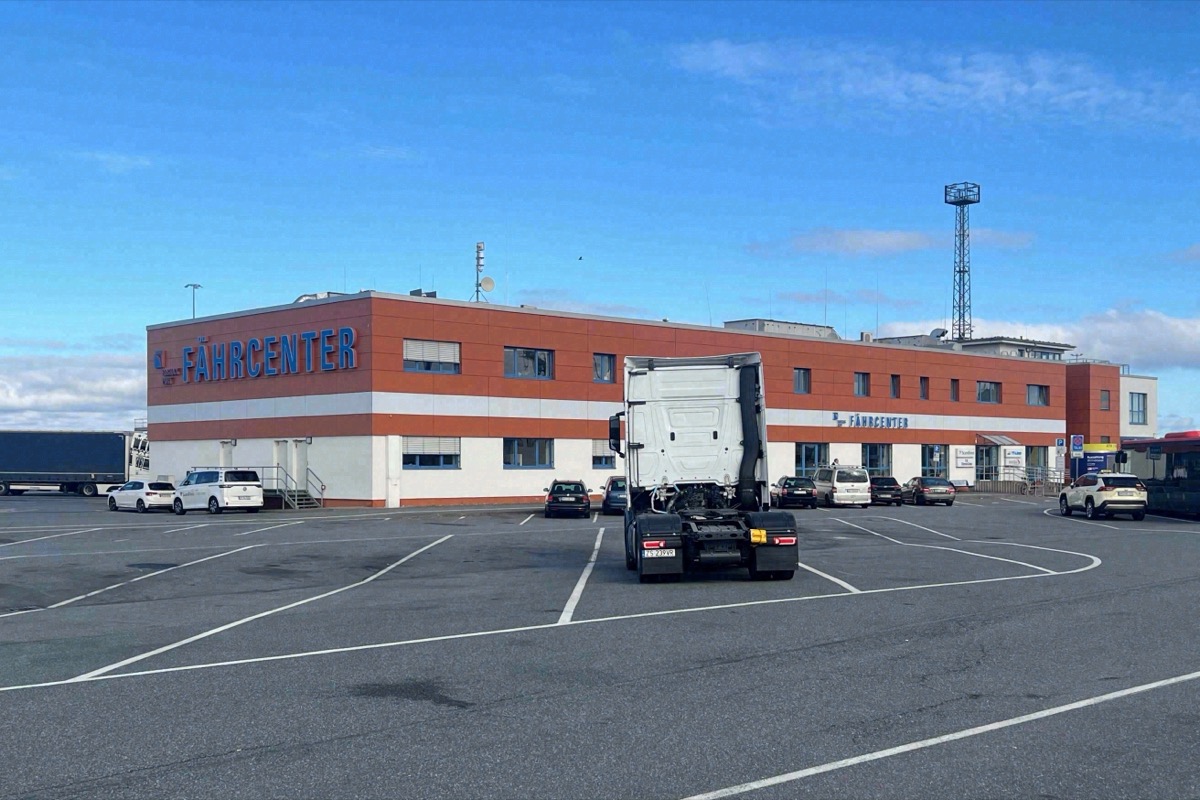

The Rostock-Gedser ferry route at a glance
Table of Contents
The Rostock-Gedser ferry is the direct route across the Baltic Sea between Mecklenburg-Vorpommern and Denmark: 52 kilometres at sea, around two hours, several departures a day in each direction. Scandlines runs it with its two hybrid ferries, M/S Berlin and M/S Copenhagen. Heading from northern Germany to Denmark or on to Sweden, you save half a day compared with the overland route through Jutland, and swap the motorway for a break on deck.
This page takes you through the crossing step by step: getting there, check-in, your time on board, vehicles and bikes, arrival and choosing a ticket. Departure times and fares change most often, so check them in the timetable and on the Prices & Fares page.
Getting there and the terminals
In Rostock, the Scandlines terminal is in the Überseehafen at Zum Fährterminal 1. Coming on the A19 from Berlin or the A20 from Lübeck and Stralsund, take the Rostock-Überseehafen exit; from there a four-lane access road leads through the port area to the berth. Follow the signs for Gedser, as other lines also sail from the Überseehafen.
Without a car, take the train to Rostock main station and continue by S-Bahn and bus to the terminal, around 40 minutes for the journey. On the Danish side, the terminal is at Jernbanevejen 1 in Gedser, at the end of the E55 and with a direct bus link from Nykøbing Falster. Both routes in detail: Rostock Port & Ferry Terminal and Gedser Port & Ferry Terminal.
Check-in and departure
With a vehicle, check-in closes 15 minutes before departure; on foot and by bike, 30 minutes applies in Rostock (more on that below). It opens two hours before departure, so allow at least 30 minutes at the port. There is no online or number plate check-in on this route: you always check in at the port.
There are two lanes at the terminal. The blue lane is for cars up to 6 metres: you check in at a self-service machine, following the on-screen instructions, and it prints your ticket. The yellow lane is staffed and is for longer vehicles, trailers, caravans, motorcycles and bicycles, for travellers with reduced mobility and for anyone paying in cash.
Foot passengers check in at the passenger terminal. In Rostock, be there 30 minutes before departure, because a free shuttle bus takes you to the ship; in Gedser, 15 minutes is enough, as a passenger bridge leads on board. Keep your booking confirmation and ID to hand: the route crosses an internal EU border, and spot checks are possible. The check-in page explains the whole process.
On board
Two hours is too short for a cabin (there are none on this route) but long enough for a proper meal. On board you will find a buffet restaurant, a cafeteria serving quick meals, a coffee bar and the Travel Shop; the cafeteria and shop are open around the clock. Wi-Fi is free, both on the ship and in the waiting areas at both ports.
Payment on board is cashless. That is handy on this route, because you switch between the euro and the Danish krone: with a card, you need no local currency for the crossing. There is a play area for children, and parking spaces near the lift for travellers with reduced mobility; these are limited, so state your needs when booking. For what makes the two ships technically special, see Scandlines and the Ships on the Route.
Vehicles, bikes and pets
Both ferries have two vehicle decks with 800 lane metres each. Clearance is 4.60 metres on the lower deck and 4.20 metres on the upper deck, so the route poses no problem for motorhomes and cars with trailers or caravans, as long as you give the correct dimensions when booking. Motorcycles have their own fare, and you can take a bicycle for a small surcharge on top of the passenger ticket.
Dogs and cats are welcome, but they must meet the entry requirements and stay in designated areas on board. For details, see the Travelling with Pets page.
Arrival and onward travel
From Gedser, the E55 takes you to Copenhagen in around two hours; the journey with and without a car is described on From Rostock to Copenhagen. If you are continuing to Sweden, it is a good half hour more from Copenhagen across the Øresund Bridge to Malmö. You can combine the ferry and the toll in one booking; see Combined Ticket with the Øresund Bridge.
In the other direction, the access road from the Rostock terminal leads straight onto the A19 and on to the A20. The return crossing has its own departure times and a different procedure at the terminal; the Gedser-Rostock Ferry page covers both.
Tickets and fares
Tickets are sold per vehicle: the driver and all passengers are included in the car ticket. What you pay therefore depends mainly on the ticket type and when you book.
If your travel date is fixed, the cheapest online fare is the right choice; it is only valid for the booked departure. The Standard fare covers all departures on your travel day, and the Flex fare allows free rebooking. There are also day and return tickets, plus separate fares for motorcycles and foot passengers. You can buy at the terminal, but it costs several times the online price. Fares for cars, motorhomes, motorcycles, bikes and foot passengers are on the Prices & Fares page, and the FAQ answers questions about booking and travel.
Rostock-Gedser
Across the Baltic to Denmark
The Rostock-Gedser ferry is the direct route across the Baltic Sea between Mecklenburg-Vorpommern and Denmark. Scandlines takes you from Rostock to Gedser on the island of Falster in around two hours, up to 10 times a day in each direction.
The route is served by the modern hybrid ferries Berlin and Copenhagen, with a restaurant, a shop and space for cars, motorhomes and lorries. From Gedser you reach Copenhagen in around two hours.
- Crossing
- approx. 2 hrs
- Operator
- Scandlines
- Frequency
- up to 10×/direction
- Distance
- 52 km
Departures from Rostock to Gedser
FAQ
Common questions about the Rostock-Gedser ferry
How long does the Rostock-Gedser ferry take? +
The crossing over the Baltic takes around two hours.
How often does the ferry run? +
Scandlines sails up to 10 times a day in each direction. The current times are in the timetable.
Can I take my motorhome? +
Yes. Clearance is 4.60 metres on the lower vehicle deck and 4.20 metres on the upper one. You state the vehicle type when booking, and the check-in page explains how it is handled at the port.
When do I have to be at check-in? +
With a vehicle, 15 minutes before departure at the latest; at least 30 minutes is recommended. Check-in opens two hours beforehand. As a foot passenger or with a bike in Rostock, 30 minutes. Full details on the check-in page.
Can I continue from Gedser to Copenhagen? +
Yes, in around two hours via the E55. The whole journey is described on the From Rostock to Copenhagen page.
What about the return from Gedser to Rostock? +
The same route in the opposite direction, with its own departure times in the timetable. Getting to the terminal, check-in and onward travel from Rostock are covered on the Gedser-Rostock Ferry page.
Ready to cross?
Compare departures and get your ticket for the Rostock-Gedser route.